
Dealing with Wafer Contamination in High-Load Heating
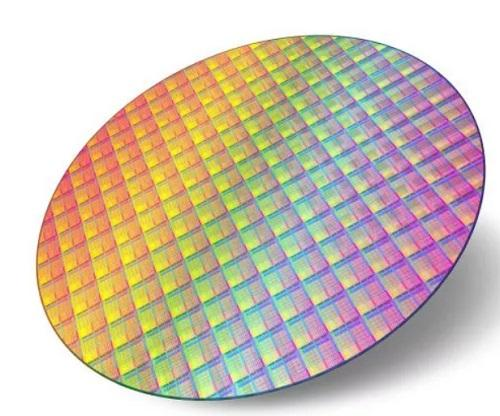
In a semiconductor fab, a lamp blowing out is a nightmare. It’s not just about the downtime—it’s the mess. When a quartz envelope snaps under a heavy load, you’ve got glass shards and nasty impurities raining down right onto your wafers. That’s exactly why we built our UHP heater lamps. We wanted to stop that secondary pollution from happening in the first place.
Why lamps actually fail
Most tubes burst because of thermal shock or those annoying localized hotspots. To fix this, we use synthetic high-purity quartz. It keeps the thermal expansion uniform, so the glass doesn’t just crack the moment you ramp up the power. By keeping the quartz pure, we get rid of those tiny microscopic inclusions. Those are usually the “weak spots” where stress builds up under high wattage until—pop.
Keeping things clean (and safe)
We don’t just hope for the best; we have a plan to keep particles away from your wafers. Our UHP lamps come with reinforced end-seals and coatings that keep the halogen cycle stable. But here’s the thing: the quartz shouldn’t do all the heavy lifting. We always suggest pairing these lamps with a secondary quartz sleeve or a containment shield. Think of it as an insurance policy. If a filament burns out and the tube cracks, the shield catches the debris. Your vacuum chamber stays clean, and you don’t have to scrap an entire batch of wafers. It’s a much easier day at the office.
The trade-offs you should know about
High-density UHP lamps are great for those rapid ramp rates you need for precision processing. But that kind of heat puts a lot of pressure on your power supplies. You’ll want to make sure your PID controllers are tuned just right. If you get a current spike during startup or overshoot your target temperature by even a few degrees, you’re basically cheating your lamps out of their lifespan. One last tip: these are built for high-load environments, but they get hot. Really hot. Double-check that your cooling manifolds can handle the radiant heat coming off the lamp ends. You don’t want to deal with a melted connector.