

Stop wasting heat: A better way to build bio-sensors
When you’re making bio-sensors, temperature is everything. You have to cure those polymers and activate chemical layers just right. One slip-up, one hot spot, and you’ve fried your substrate. For a long time, the go-to was the convection oven. But let’s be honest: heating up a massive chamber of air just to warm up a tiny workpiece is a waste of energy. That’s why we switched to shortwave IR lamps. Instead of heating the room, we hit the workpiece directly. It’s cleaner, faster, and way better for the planet.
Getting the heat right
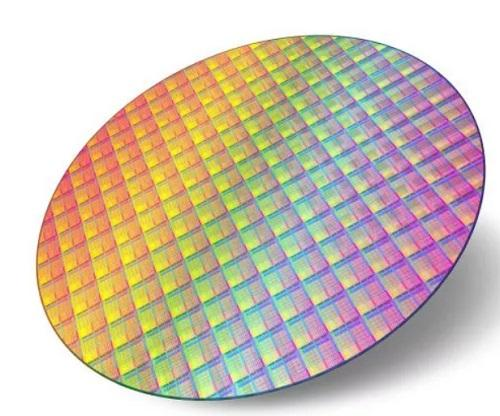
In the world of high-end fabrication, speed is the name of the game. We use high-wattage quartz elements because they give us the punch we need to get things moving. The beauty of shortwave IR is that it actually penetrates deep into the materials. You get a uniform cure across the whole wafer, not just on the surface. The result? Your cycle times drop. You’re using fewer kilowatt-hours per unit, which keeps the electric bill down and the efficiency up.
The nitty-gritty details
We don’t mess around with the materials. We use high-purity quartz tubes because “outgassing” is a nightmare—one tiny bit of contamination and your sensor surface is ruined. Here’s a trick we use: we apply specific coatings to the lamps. This shifts the light to match exactly what the material wants to absorb. It stops the temperature from “over-shooting” and cooking your project. And a quick tip on the electronics—get a stable power supply. If your voltage swings, your lamps flicker. Those tiny spikes can wreck an entire batch. We also use standard connectors, so if a lamp goes out, you can swap it in seconds and get the line moving again.
The catch (and how to fix it)
Now, direct IR heating is fast, but it’s intense. You’re creating a lot of concentrated heat in one spot. While your carbon footprint shrinks, your cooling system has to work harder. If your cooling manifolds aren’t up to the task, you’ll deal with radiant heat bouncing off your jigs. That leads to “thermal drift,” and suddenly your sensors aren’t accurate anymore. To stop that from happening, we plug in closed-loop PID controllers. They keep the temp within ±1°C. It’s a tight window, but it means you stop throwing away scrapped parts. It’s a win for the budget and a win for the environment.