

Getting the Most Out of Your IR Heating
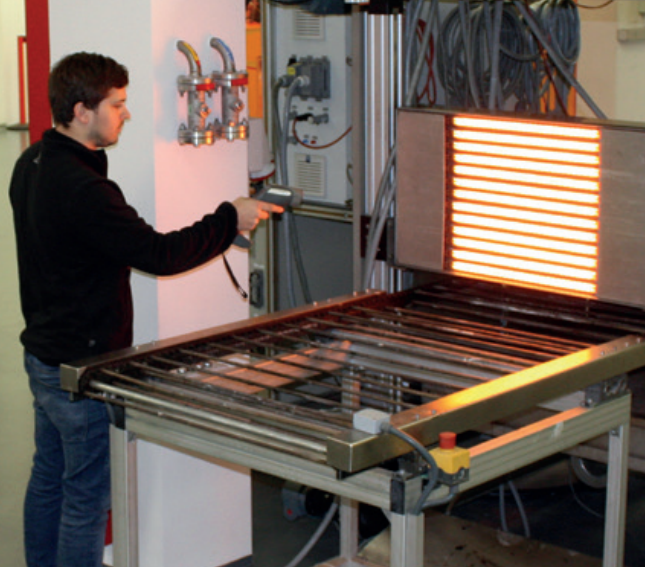
In the world of semiconductor processing, time is everything. For a long time, we relied on hot air circulation, but let’s be honest—it’s slow. It’s like trying to heat a room with a hair dryer; it takes forever and the heat never seems to hit the same spot twice. That’s why we’ve moved toward infrared (IR) heating. It doesn’t mess around with air currents. It just hits the target. Fast. But here is the catch: a lamp by itself isn’t enough. To actually make this work, you need a precision-engineered aluminum reflector.
Where is the heat actually going?
Think about a bare IR lamp. It throws energy in every single direction—basically a 360-degree blast. Without a reflector, you’re wasting half your power heating up the inside of your machine frame. That’s just expensive waste. We use high-purity aluminum reflectors to grab that wasted energy and shove it right back onto the workpiece. The shape of the reflector is what does the heavy lifting. If you need to hit one specific spot, a parabolic curve concentrates the beam. If you need a steady, even strip of heat, a cylindrical profile is the way to go. It’s the difference between a flashlight and a spotlight. It means you hit your target temps in seconds, not minutes.
Why stick with aluminum?
We use aluminum because it plays incredibly well with the infrared spectrum. When you polish it or anodize it, the surface reflects the heat instead of soaking it up. If the reflector itself gets too hot, it starts to warp, and then you’re in trouble. And you have to be obsessive about the fit. If that lamp isn’t sitting perfectly in its groove, you’ll get “hot spots.” Those uneven patches can warp a substrate or completely ruin a wafer. It’s a small gap, but it’s a huge problem.
The real-world trade-off
Switching from hot air to IR is a breath of fresh air for your floor space. You can get rid of those massive blowers and clunky ducting. Your machines get smaller, and your ramp-up times vanish. But it’s not a magic fix. IR needs a clear “line-of-sight.” If your part has deep cavities or weird nooks and crannies, the IR light simply can’t reach them. Air can flow into those spots, but light can’t bend around corners. You have to be really smart about where you place your lamps to avoid shadows. If you miss a spot, you end up with cold zones, and suddenly your process isn’t so efficient after all.