
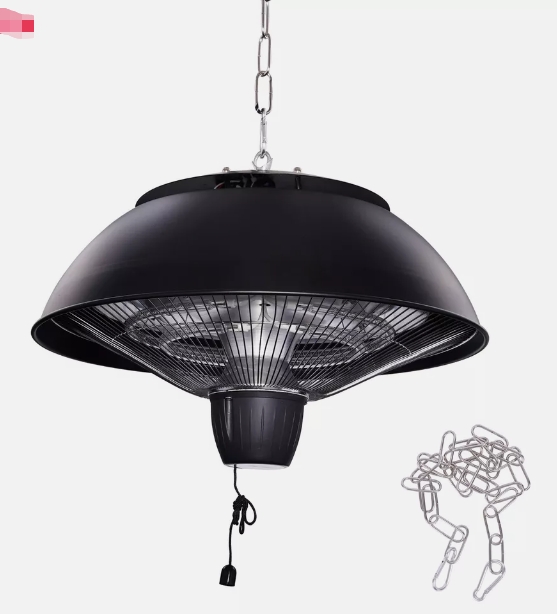
Why Your Ceiling Heaters Actually Die (and How We Fixed It)
Here is a little secret about workshop heaters: it’s rarely the heating element that gives out first. Usually, the whole thing crashes because of a tiny failure where the wire meets the tube. Think of it as a thermal bottleneck. You’ve got a quartz tube getting screaming hot, and a wire trying to feed it power. Cheap heaters just slap some glue or a loose crimp on that joint and call it a day. The problem? That stuff bakes. It cracks. It shrinks. And then it fails. The constant battle with heat The real killer is something called thermal cycling. Your heater turns on, gets hot, expands, and then cools down and shrinks. Metal and glass don’t move at the same speed. In a low-budget build, this creates a tiny gap. Just enough for oxygen and moisture to sneak in. Once that happens, the tungsten lead starts to oxidize. The insulation goes bad, things start to carbonize, and—pop—the wires arc and short out. Not exactly what you want happening on your ceiling. How we do things differently We decided to stop patching the problem and actually fix it. Instead of using surface-level glue, we use high-temperature vacuum sealing and a special ceramic-composite potting. Basically, we fuse the lead-wire directly into the tube. It creates an airtight seal that keeps the oxygen out and the heat exactly where it belongs. We also use silver-plated copper leads. Why? Because it cuts down on contact resistance. It stops the connection point from turning into its own little heater. Plus, because the seal is so tight, the wires don’t wiggle or shift when you’re installing them. They just stay put. One quick heads-up on installation There is a trade-off here. Because the seal is so solid, the lead-wire is a bit more rigid. Please, don’t try to force a sharp kink into the wire just to cram it into a tight junction box. If you bend it too aggressively, you might crack that vacuum seal. Just give the wire a natural, gentle curve. Take a second to get the wiring right, and your heater will actually last as long as it’s supposed to, without any catastrophic surprises.