Stop Wasting Time Waiting for Your Wafers to Heat Up
If you’re still relying on hot air circulation for your semiconductor processing, you’re basically playing a waiting game. Think about how convection works. You heat the air, and then you wait for that air to heat the wafer. It’s a slow process. There’s a lag. And in a fab, that lag is just wasted money. Infrared (IR) heating cuts out the middleman. Instead of heating the air, it sends electromagnetic radiation straight into the substrate. It’s nearly instant.
The Speed Factor
Anyone who’s dealt with hot air systems knows the pain of those long warm-up cycles. You’re just sitting there waiting for the chamber to stabilize. It’s frustrating. IR lamps change that. They hit your target temperature in seconds. When you’re dealing with curing or degassing, the difference is night and day. We’re talking about slashing your heating cycle by 40% to 70%. It’s not some vague “improvement.” It’s literally shaving seconds off every single wafer. That adds up fast.
The Catch (Because there’s always one)
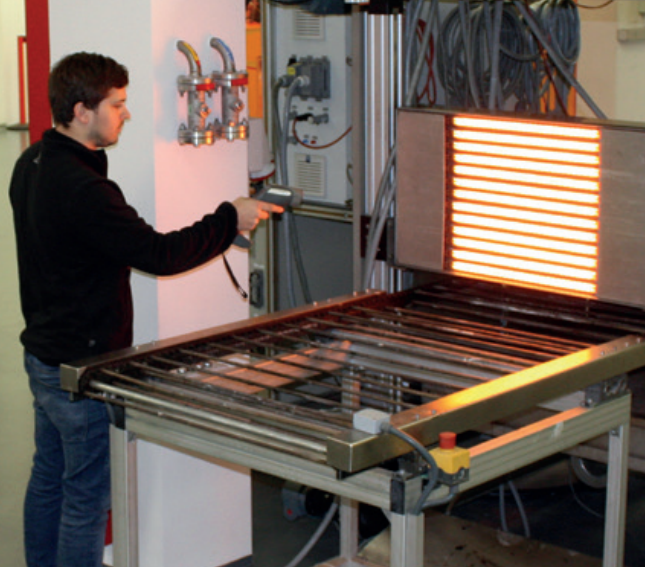
Now, you can’t just rip out a heater, plug in an IR lamp, and call it a day. IR puts out a lot of concentrated heat. If your lamp placement is even slightly off, you’ll end up with hot spots that can ruin a batch. You’ll also need to rethink your sensors. Forget about checking the ambient air temperature—that doesn’t tell you anything anymore. You need real-time surface monitoring to know what’s actually happening to the material.
Making it Work in Your Space
Most fab lines are getting tighter. Space is a premium. Giant convection ovens are a nightmare because they eat up so much floor space. IR arrays are compact. You can tuck them right into your conveyor line. This lets you move to a continuous flow instead of processing in batches. It’s faster, and your other machine components don’t have to soak in heat for nearly as long. Just a heads-up: make sure your cooling fans can handle the radiant heat bleed. If you don’t, you’ll fry your control electronics, and then you’re back to square one.