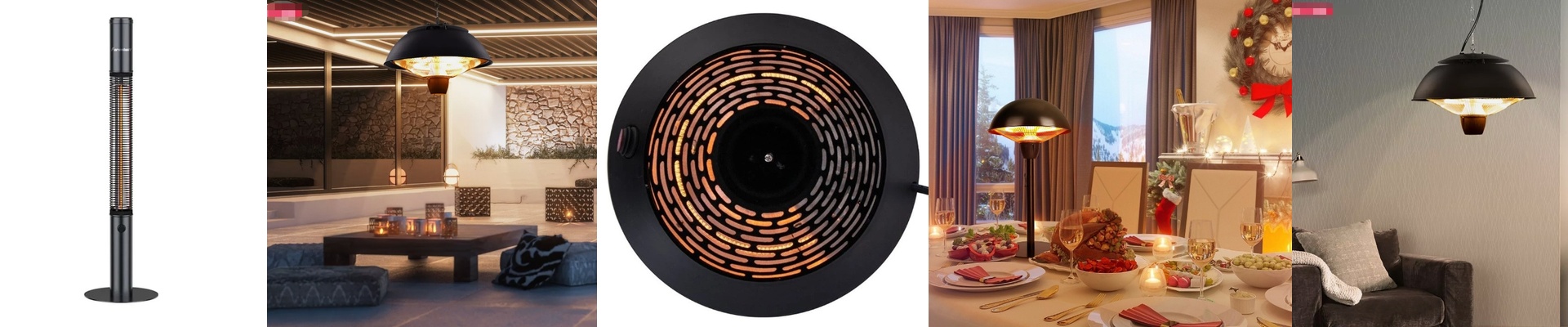

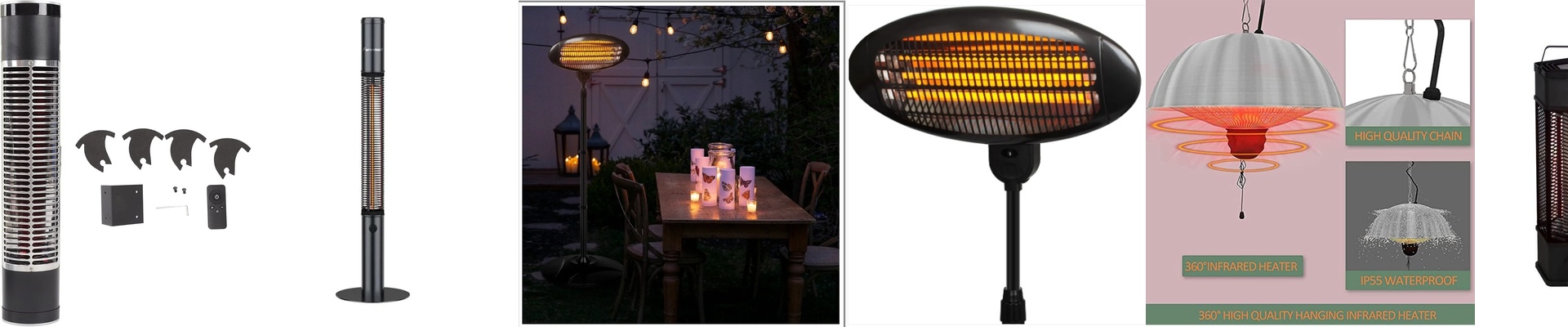
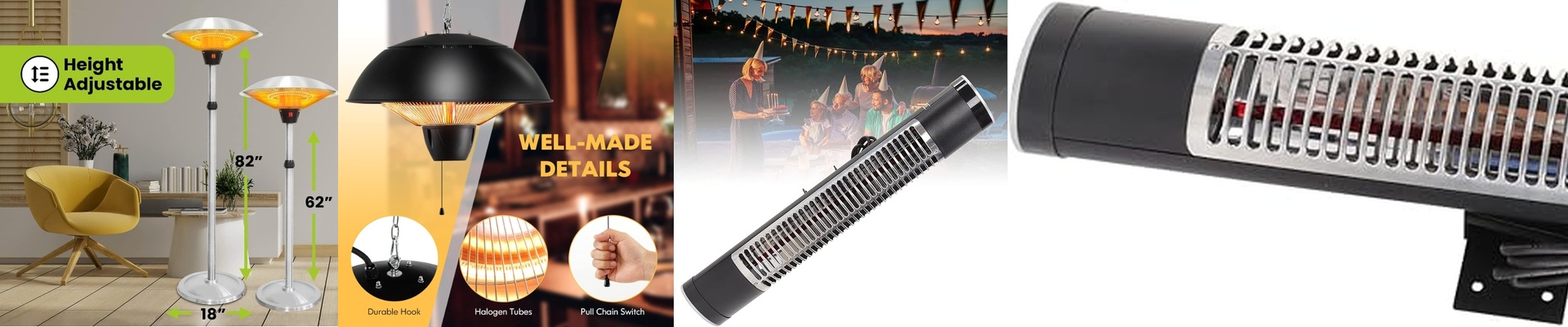

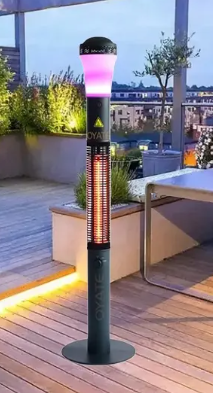
The sun drops, and the air turns bite-hard—suddenly your patio feels like it’s closing for the night. You want to stretch the evening, but nobody wants a heater that roars like shop machinery while everyone’s trying to unwind. A low-noise electric heater changes that equation: warmth, without turning the atmosphere into a mechanical mess.
What’s under the hood
We built this around infrared radiant technology, and that matters. It warms people and objects directly instead of trying to heat the air around them. The payoff is immediate, even heat that feels like standing near a sun-warmed wall—natural, not forced. Inside, you’ve got a carbon fiber element sealed inside a quartz tube. That’s the practical choice: fast heat-up, long life, and output that stays steady instead of yo-yoing. It runs on a standard 120V outlet, pulls 1500W, and covers a 150-square-foot outdoor area with a focused warmth zone. For comfort and safety, there’s a built-in thermostat to keep temperature stable, plus tip-over protection and an IP rating for outdoor use. The quiet performance comes from a low-RPM fan and an aerodynamic housing that keeps sound under 45 dB—about the level of a quiet conversation.
Why it fits the way people actually use outdoor space
On a calm evening, noise is the quickest way to ruin the vibe—whether you’re talking, listening to music, or just reading. This low-noise electric heater leans on infrared warmth, so you feel the comfort within seconds of switching it on. It holds a steady temperature, which helps avoid the on-off cycling that often creates those annoying noise spikes. You end up with longer, more relaxed time outside, and because radiant heat targets the people in the space, the energy use stays sensible. The footprint is compact enough to sit in a deck corner, and the heat feels even—no blasts, no hot spots, just steady comfort.
What to do (and what to watch for)
For the best results, place the heater so it radiates directly toward the seating area, and keep it protected from heavy rain. It needs a grounded outlet, and the circuit should be able to handle 1500W without strain. The sound is low, but it’s not zero—think of it as a soft background hum. If you want near-silent operation, keep the unit slightly off to the side of the main seating and use the adjustable angle to aim the warmth where you need it.